A special diet (and a limited cupboard) leads one to adapt a lot of recipes.
This custard is a hugely adapted version of this recipe and the crew at bridge night last week ate it all up ;) The custard could be used as a side dish for savoury meals too.
Ginger Hemp Squash Custard
1/4 cup pesticide free hemp seed nut $22.00/kg MB ManitobaHarvest
2 organic free range eggs $5.53/dozen ON Karma
1 cup water
1 tsp organic dried ginger $36.17/kg ? Karma
6 pitted dates $3.99/kg IRAN Local grocery
Mix the above in a blender until the dates are thoroughly dessicated.
Add
1/2 cooked organic butternut squash or about 3 cups $2.95/kg ON Karma
Pour this mixture into an ovenproof baking dish and bake for 1 hr at 400F or until a knife comes out clean. The above picture was taken before I put it in the oven.
Hemp/Chia/Sesame Seed Pie Crust
1/4 cup organic unpolished sesame seeds $3.50/kg China Karma
1/8 cup organic hazelnuts $18.95/kg Turkey Karma
Grind the above in a nut grinder in order to obtain a mealy texture.
Add
1/4 cup pesticide free hemp seed nut protein $22.00/kg MB ManitobaHarvest
Add
1/4 cup cup chia gel (add 1/3 cup chia seeds to 2 cups warm water and shake and let sit for about 10 minutes) $7.95/kg Mexico Karma
1/4 cup maple syrup $8.20/kg ON Karma
Mix the above thoroughly and press into a glass pie pan.
Bake at 400 F for 20-25 minutes or until edges of the crust turn golden - the above picture was taken after I took it out of the oven.
Monday, 31 March 2008
Alexandra's 6 layer Lasagna: Gluten/Dairy/Legume/Tomato Free
One of my core food groups used to be pasta.
Strangely...it has not been something I've really missed although from this blog you might see that I have attempted to recreate a few of my past favourites in accordance with my new food life. There are many varieties of rice pasta available but I don't like to overdo it (a hard task when you are gluten free).
Lasagna is one of my daughter's favourites. She regularly moans about not having it at our house and requests it at her dad's a lot (but he buys frozen stuff so it's just not the same she says).
I found gluten free rice lasagna pasta at the local grocery store recently and have been mulling what to do with it (no tomatoes? no dairy? yikes).
Seeing Karina's Uncheese Sauce Fit for a Goddess inspired me to whip up this creamy lasagna (with a slightly altered version of her recipe below). I served it with roasted sweet potatoes.
According to my daughter and a friend that was over for dinner last night....it was a perfect success. I am delighted and so grateful for Karina....she truly is a goddess :)
Karina the Goddess' Uncheese Sauce (my version...mostly the same)
4 tablespoons organic sunflower oil $2.09/L ON Karma
5 tablespoons sweet rice flour $1.67/kg THAILAND Chinatown, Toronto
2 1/2 cups organic plain rice milk (warm or room temperature is best) $2.09/L QC Karma
2 rounded tablespoons nutritional yeast $11.77/kg ? Ambrosia's
1/2 tsp sea salt or to taste $1.06/kg ? Karma
1/2 tsp organic yellow mustard seed or to taste ? ? Karma
1 tbsp organic apple cider vinegar or to taste (Filsinger's ) $2.90/L ON Karma
1/4 tsp organic nutmeg ? ? Karma
1/2 teaspoon organic turmeric for color $23.85/kg ? Karma
In a saucepan, heat the oil over medium heat, and stir in the rice flour using a whisk. Cook and stir the flour - making a thick paste. Stir for a few minutes to cook the raw flour taste out of it.
Slowly add in the rice milk, whisking to blend the flour paste and rice milk.
Bring the mixture to a bubble (it will thicken as it heats) then reduce the heat to low. Add the remaining ingredients and whisk to blend.
Continue heating and stirring the sauce over low heat for about five to ten minutes. Adjust seasonings if required (I used the exact measurements above).
This sauce is DELICIOUS and quite versatile and of course, I used it for the below lasagna. I'm looking forward to using it in other ways too.
Alexandra's 6 layer Lasagna
Layer 1:
The above sauce.
Layer 2:
1 cooked package brown rice lasagna noodles about $17.85/kg ON local grocery store health food section
Layer 3:
1 pound organic ground turkey $16.95/kg ON Beretta
1 medium lightly chopped organic onion $3.25/kg ON Karma
3 chopped cloves organic garlic $11.15/kg ON Karma
1/4 cup turkey stock (I make my own and freeze it).
Cook all of the above until turkey is thoroughly cooked.
Layer 4:
2 stalks chopped organic celery$2.90/bunch CA Karma
1/4 head of cauliflower florets $3.85/head CA Karma
Layer 5:
10 sliced organic crimini mushrooms $9.90/kg VA Karma
Layer 6:
1 bunch organic large spinach leaves washed with thick ribs removed $1.98/bunch CA Karma
I made two lasagnas with the above ingredients and each lasagna had two layers of all the ingredients (one 9"x13" pan and one smaller casserole pan). I added sauce on the top of both of them and also the leftover mushrooms.
Bake the lasagna at 375 F for approximately 30 minutes and then remove and cool by placing in the dishes in your fridge for at least 1 hour.
Alternatively, you could reduce the temperature to 350F and cook for an additional 20 minutes or so but allow the lasagna to cool for about 10 minutes before serving.
Reheat a completely cooled lasagna at 350 F for about 40 minutes and roast additional vegetables to serve with this dish.
Friday, 21 March 2008
Quinoa Spinach Pilaf
1 medium lightly chopped organic onion $3.25/kg ON Karma1/2 cup frozen cranberries - thawed and chopped $2.09/kg ? Karma1 bunch organic spinach washed and loosely chopped $1.98/bunch CA Karma2 stalks lightly chopped organic celery$2.90/bunch CA Karma
1 cup organic quinoa (browned or toasted before adding) $3.52/kg MX Karma
2 cups water/vegetable stock/meat stock
salt and pepper to taste
Simmer the above for at least 20 minutes. Serve with grilled meat/poultry/fish/nuts.

1 medium lightly chopped organic onion $3.25/kg ON Karma1/2 cup frozen cranberries - thawed and chopped $2.09/kg ? Karma1 bunch organic spinach washed and loosely chopped $1.98/bunch CA Karma2 stalks lightly chopped organic celery$2.90/bunch CA Karma
1 cup organic quinoa (browned or toasted before adding) $3.52/kg MX Karma
2 cups water/vegetable stock/meat stock
salt and pepper to taste
Simmer the above for at least 20 minutes. Serve with grilled meat/poultry/fish/nuts.

Mostly Local Goat Millet Curry....Da Bomb
I have loved curry since I was wee thanks to a set of nannies I had as a small child.
I have evolved far beyond my Irish boiled meat and potato roots thanks to being raised in Toronto by two very culturally aware parents. Although they might not know it...they were both the original pioneers of food exploration for me and for that I am most humbly grateful.
Many years ago I acquired an authentic Indian cookbook that was produced in Kitchener by a famed local Chef, Bharti Vibhakar. The cookbook should still be available at her Spice of India store in Kitchener (more contact details are given in the first link...she operates a stall in the weekly Kitchener market downtown too). The recipes in her fabulous cookbook are vegetarian but the mix of spices have enabled me to create many a fine curry over the years. This curry (like most) tastes even better the next day.
And P.S. I'm working on gluten/diary/legume free chapatti ;)
I have evolved far beyond my Irish boiled meat and potato roots thanks to being raised in Toronto by two very culturally aware parents. Although they might not know it...they were both the original pioneers of food exploration for me and for that I am most humbly grateful.
Many years ago I acquired an authentic Indian cookbook that was produced in Kitchener by a famed local Chef, Bharti Vibhakar. The cookbook should still be available at her Spice of India store in Kitchener (more contact details are given in the first link...she operates a stall in the weekly Kitchener market downtown too). The recipes in her fabulous cookbook are vegetarian but the mix of spices have enabled me to create many a fine curry over the years. This curry (like most) tastes even better the next day.
And P.S. I'm working on gluten/diary/legume free chapatti ;)
Goat Millet Curry
Lightly brown 1 kg goat meat with bones using a grilling pan or your broiler $10.00/kg ON local grocery store
While the meat is broiling prepare the following:
1 medium lightly chopped organic onion $3.25/kg ON Karma
2 medium lightly chopped organic carrot $2.09/kg ON Karma
1 medium sized lightly chopped organic celeriac $3.95/kg ON Karma
2 tbsp white poppy seed (aka Khuskhus) widely available in Little India (Toronto)
2 cups water
Mix the above ingredients in a blender and set aside.
Heat a heavy bottomed pan with:
1 tbsp organic sunflower oil $2.09/L ON Karma
1 tsp cumin seeds widely available in Little India (Toronto)
Heat the cumin seeds until they begin to brown. Stir frequently to avoid burning.
Once the cumin seeds have been browned then add the blender mixture to the pan and then add the following spices:
1 tsp Garam Masala widely available in Little India (Toronto)
1 tsp Amchur Powder (ground mango, nice sour taste) widely available in Little India (Toronto)
1 tsp Turmeric widely available in Little India (Toronto)
1 tsp Hot Chili powder (more or less to taste) widely available in Little India (Toronto)
1 tsp sea salt $1.06/kg ? Karma
Add the browned goat meat with bones to the above mixture and let this simmer on low heat for at least 2 hours. Add the following at least 30 minutes before you want to serve this dish. Add additional water if you want a more watery texture for the final curry.
1 cup organic millet $1.75/kg ? Karma
Saturday, 15 March 2008
I'm craving celery: Warm chicken salad with hemp oil ginger mustard vinaigrette
I've been trying to eat *mostly* local during this seeming-to-never-end winter (and fyi: winter is due to end at Mar 20 2008, 05:48 UT - phew).
Throughout my life...my nearly 41 years...I have experienced strange cravings for celery. The stranger thing about my current craving is that I've been eating celery regularly for at least 3 years. I like celery but I don't love it - but I love it if I have a craving ;)
So celery was a food item I only incorporated into my regular diet with reluctance before moving to a mostly fresh produce lifestyle completely about 3 years ago after fits and spurts of healthy food phases throughout my late 20s/early 30s. I am now very fond of celery but still don't love it.
Now...for me, eating any item regularly means that it is in my fridge (but not necessarily consumed daily) about 50% of the time.
A bunch of celery, for me and my teenage daughter, lasts about 2 weeks or maybe a bit less. She is not crazy about celery but will eat it...especially when it is hidden in blenderized sauces ;). I wait for at least 2 weeks before buying another bunch of celery and throughout this winter it has been less often due to the locavore diet I am trying to pursue. I also think that the regular rotation of our diet is important for digestive purposes i.e. not only ecological purposes.
So what's with this current craving I'm having for celery?
Methinks it is because my body is crying out for the abundance of fresh produce about to 'spring' from our land...and by fresh I mean LOCAL. Fresh is something that is within days of being harvested. Root vegetables and apples are the closest thing to 'fresh' that is available to us Ontarians at the moment.
So tonight I offer you my California grown organic celery with local hydroponic fresh greens chicken salad.
The hemp oil vinaigrette is quite yummy and I've been putting it on my salads for a few months now - but again, not all the time. I take breaks from all foods regularly so that my body is not constantly processing a limited number of food items. I happen to think that the abundance of a few type of foods in the current modern diet is a large part of the health issues that are arising in our modern world. I am not alone in that thinking either.
I was gonna call this salad: "I've fallen on the ice again so leftovers are a godsend" salad but I thought the celery craving aspect was a worthier title. I am mostly fully recovered from the fall. Nothing broke except maybe a little of my spirit. But, the spirit mends too. Sometimes much more quickly than our bodies.
Warm chicken salad with hemp oil ginger mustard vinaigrette
2/3 cup reheated previously cooked organic long grain brown rice $4.45/kg USA Karma
2/3 cup reheated previously cooked pieces of diced organic chicken $16.09/kg ON Beretta
1 medium raw organic carrot $2.09/kg ON Karma
2 stalks organic celery$2.90/bunch CA Karma
1 cup raw organic baby arugula$2.55/bunch ON Karma
2 tbsp raw organic sunflower seeds$22.66/kg ON Karma
2 tbsp hemp oil ginger mustard vinaigrette (see below for recipe)
hot chili pepper/hot cayenne and sea salt and pepper to taste
Hemp oil ginger mustard vinaigrette (this is for a 1 cup batch which can be kept in the refridgerator)
1/2 cup hemp oil $15.00/L MB Manitoba Harvest
1/2 cup apple cider vinegar (Filsinger's ) $2.90/L ON Karma
1/2 tsp organic yellow mustard seed ? ? Karma
1/2 tsp organic ginger $36.17/kg ? Karma
1/2 tsp sea salt $1.06/kg ? Karma
and P.S. I took the below pic yesterday at Karma. 33 locally produced items in the fruits and vegetables section of the store on March 14th, 2008. That number will climb very shortly.....YEAH!!
Throughout my life...my nearly 41 years...I have experienced strange cravings for celery. The stranger thing about my current craving is that I've been eating celery regularly for at least 3 years. I like celery but I don't love it - but I love it if I have a craving ;)
So celery was a food item I only incorporated into my regular diet with reluctance before moving to a mostly fresh produce lifestyle completely about 3 years ago after fits and spurts of healthy food phases throughout my late 20s/early 30s. I am now very fond of celery but still don't love it.
Now...for me, eating any item regularly means that it is in my fridge (but not necessarily consumed daily) about 50% of the time.
A bunch of celery, for me and my teenage daughter, lasts about 2 weeks or maybe a bit less. She is not crazy about celery but will eat it...especially when it is hidden in blenderized sauces ;). I wait for at least 2 weeks before buying another bunch of celery and throughout this winter it has been less often due to the locavore diet I am trying to pursue. I also think that the regular rotation of our diet is important for digestive purposes i.e. not only ecological purposes.
So what's with this current craving I'm having for celery?
Methinks it is because my body is crying out for the abundance of fresh produce about to 'spring' from our land...and by fresh I mean LOCAL. Fresh is something that is within days of being harvested. Root vegetables and apples are the closest thing to 'fresh' that is available to us Ontarians at the moment.
So tonight I offer you my California grown organic celery with local hydroponic fresh greens chicken salad.
The hemp oil vinaigrette is quite yummy and I've been putting it on my salads for a few months now - but again, not all the time. I take breaks from all foods regularly so that my body is not constantly processing a limited number of food items. I happen to think that the abundance of a few type of foods in the current modern diet is a large part of the health issues that are arising in our modern world. I am not alone in that thinking either.
I was gonna call this salad: "I've fallen on the ice again so leftovers are a godsend" salad but I thought the celery craving aspect was a worthier title. I am mostly fully recovered from the fall. Nothing broke except maybe a little of my spirit. But, the spirit mends too. Sometimes much more quickly than our bodies.
Warm chicken salad with hemp oil ginger mustard vinaigrette
2/3 cup reheated previously cooked organic long grain brown rice $4.45/kg USA Karma
2/3 cup reheated previously cooked pieces of diced organic chicken $16.09/kg ON Beretta
1 medium raw organic carrot $2.09/kg ON Karma
2 stalks organic celery$2.90/bunch CA Karma
1 cup raw organic baby arugula$2.55/bunch ON Karma
2 tbsp raw organic sunflower seeds$22.66/kg ON Karma
2 tbsp hemp oil ginger mustard vinaigrette (see below for recipe)
hot chili pepper/hot cayenne and sea salt and pepper to taste
Hemp oil ginger mustard vinaigrette (this is for a 1 cup batch which can be kept in the refridgerator)
1/2 cup hemp oil $15.00/L MB Manitoba Harvest
1/2 cup apple cider vinegar (Filsinger's ) $2.90/L ON Karma
1/2 tsp organic yellow mustard seed ? ? Karma
1/2 tsp organic ginger $36.17/kg ? Karma
1/2 tsp sea salt $1.06/kg ? Karma
and P.S. I took the below pic yesterday at Karma. 33 locally produced items in the fruits and vegetables section of the store on March 14th, 2008. That number will climb very shortly.....YEAH!!
Friday, 14 March 2008
Another great video? Yup. I fell on the ice this week. I'm taking it easy.
This is a great 2004 talk by Malcolm Gladwell (18 minutes). Statistics meets the food industry...that is right up my alley :)
Thursday, 13 March 2008
Dr. Jill Bolte Taylor: My stroke of insight
This 19 minute video by a brain scientist moved me to tears. And you?
------
------
Thanks to Holly for posting this on her blog :)
Wednesday, 12 March 2008
My Wheelchair Prevention Program
I call my ms-diet my 'wheelchair prevention program'. Only others diagnosed with a disease that could end up with a wheelchair outcome could understand that.
This is the reality that was thrust upon me with the words 'multiple sclerosis' by my doctor in February 2007. I have never been in a wheelchair and I do not care to experience it although I have more empathy than most when it comes to understanding the reality of life in a wheelchair.
Many with MS inject meds regularly in order to MAYBE avoid a wheelchair. And these injections cost $1000-$3000 PER MONTH (or more). And it's not guaranteed that you will not progress. And many insurance programs do not cover these costs.
My diet changes have cost very little (whole foods are cheaper in the long run)...not to mention the overall improvement in health that results from cutting out crap food.
But the time and physical effort involved to prepare these whole foods has been the hardest thing to cope with.
We live in a fast food society and grabbing meals on the run is the norm. This change has been the hardest to accept. I was raised in a fast food society (the emotional excitement I felt about the first McDeath's in my suburb in the 70s is something I will perplex on 'til my grave).
Creating my own system of nourishment according to my diet requirements has been the ultimate challenge in my near 41 years of life thus far. In a metropolis of 2.5 million humans I have yet to find one local MS person that is choosing to live as I do to prevent their own wheelchair. And eating out? I have one eatery that I have found so far although I haven't expended much effort after bleak early attempts to get 'fast food'.
But it is my wheelchair I am defying. No mistake about that. It's mine and perhaps you can't see it but I've dreamed it enough to make it permanently etched in my psyche.
Do you dream (nightmare) about wheelchairs? Losing sight?
Would you change your diet to *possibly* prevent a wheelchair? And remember that other MS 'treatments' might not work.....because there is no failsafe 'treatment' for MS. And also consider this interesting bit of trivia....all MS nutrition research pretty well stopped when big pharm stepped in in the late 80s early 90s.
In my life, I personally(i.e. not web related) know of three women diagnosed with MS who have not succumbed to the wheelchair through diet modifications only. This definitely helped solidify my own wheelchair prevention program. Do you have one?
I give special thanks to Lisa for inspiring this post and generating a community of hope.
Tuesday, 11 March 2008
Buckwheat Cranberry Stuffed Chicken and Kale Mushroom Acorn Squash
When was your last cooking experience with cast iron cookware?
Never? What?
It is amazing to think that many people in our modern world are so removed from basic cookware that served generations upon generations of humans.
Yes, it's heavy.
And no, it's not dishwasher safe.
If you have glazed over then you probably aren't interested in what I'm going to write next.
Cast iron cookware provides nutritional opportunities that other cookware can not. More specifically:
Never? What?
It is amazing to think that many people in our modern world are so removed from basic cookware that served generations upon generations of humans.
Yes, it's heavy.
And no, it's not dishwasher safe.
If you have glazed over then you probably aren't interested in what I'm going to write next.
Cast iron cookware provides nutritional opportunities that other cookware can not. More specifically:
Researchers found that cooking in an iron skillet greatly increases the iron content of many foods. Acidic foods that have a higher moisture content, such as applesauce and spaghetti sauce, absorbed the most iron. (via which is an excellent summary of the 1986 research publication)
Yup, you read that correctly. Go to the source for a complete list of the foods tested by the researchers. More iron? 'Naturally'? Yup. Most women of child bearing age could use a tad more iron.
And another thing about cast iron cookware. It gets very very very hot. Don't say I didn't warn you (the next time you burn yourself you'll remember this warning...as will I....lol).
And oh yeah - cleaning? Elbow grease. Heat the pan with a bit of salt water if the going gets tough (no soap). Invest in some bbq/copper bristle brushes (I have a collection). And thoroughly dry the cast iron pan after washing - I always heat mine to dry either on the stove top or in the oven. Some people lightly grease their cast iron pans before storing...I only do that with my bakeware since I do not use it as often. I use most of my cast iron cookware at least once or more a week.
I have a ceramic glass top stove so if that's an excuse you've used then you'll be happy to hear that I've not had any problems using cast iron on top of my glass topped stove. Mind you, the times I've forgotten that cast iron gets hot hot hot have not involved the dropping of the cast iron onto my stove top and I hope that is a scenario I haven't invited upon myself now that I've written it - YIKES! Perhaps the good karma intended by sharing operational issues surrounding the use of cast iron will follow me on this one ;)
Buckwheat Cranberry Stuffed Chicken
2 - 4 organic bone-in chicken breasts $16.09/kg ON Beretta
Stuffing
1/2 cup buckwheat grits - I have used buckwheat flakes for this too $5.44/kg QC Karma
1/2 cup chopped cranberries $6.43/kg ? Karma
1 medium chopped organic onion $3.25/kg ON Karma
1 cup warm water
1/2 tsp organic yellow mustard seed ? ? Karma
1/2 tsp organic dried thyme $39.86/kg ON Karma
1/2 tsp organic dried sage $27.38/kg ON Karma
1/2 tsp organic dried rosemary $23.40/kg ON Karma
sea salt and pepper to taste
2 strips chopped uncooked organic bacon $17.24/kg ON Beretta
Mix the stuffing ingredients thoroughly. Stuff each breast by carefully separating the skin from the flesh on each breast and gently packing in the above mixture. Any leftover stuffing can be baked for about 30 minutes. Bake the stuffed chicken in a heavy covered pan at 350F for 45 minutes - 1 hour depending on the size of your chicken breasts. Keeping the lid on during the entire cooking time will help the chicken retain the moisture of the stuffing. Serve each breast drizzled with the pan drippings and the below stuffed squash ;)
Kale Mushroom Acorn Squash
1 organic squash $2.53/kg ON Karma
200 g organic variety mushrooms $11.74/kg ON Loblaws
1 bunch black kale $2.25/bunch CA Karma
3-5 cloves organic garlic $11.15/kg CA Karma
Clean and halve squash and bake for 40-50 minutes face down in an oven proof pan (don't forget to roast the seeds for about 15 minutes for a pre-dinner snack ;).
In another pan - preferably cast iron with a well fitting lid to use after roasting - add the mushrooms and garlic and roast in the oven alongside the squash for about 20 minutes . Take this mixture out when there is still about 10 minutes left for the squash. Add the prepared chopped kale to the roasted garlic/mushroom pan and cover but do not return this to the oven. The heat of the cast iron pan will soften the kale just enough without overcooking it. Add this mixture to the cooked squash and serve open faced as pictured. Each serving size is approximately 1/4 squash.
Saturday, 8 March 2008
Gluten Free Dairy Free Sugar Free Buckwheat Waffles
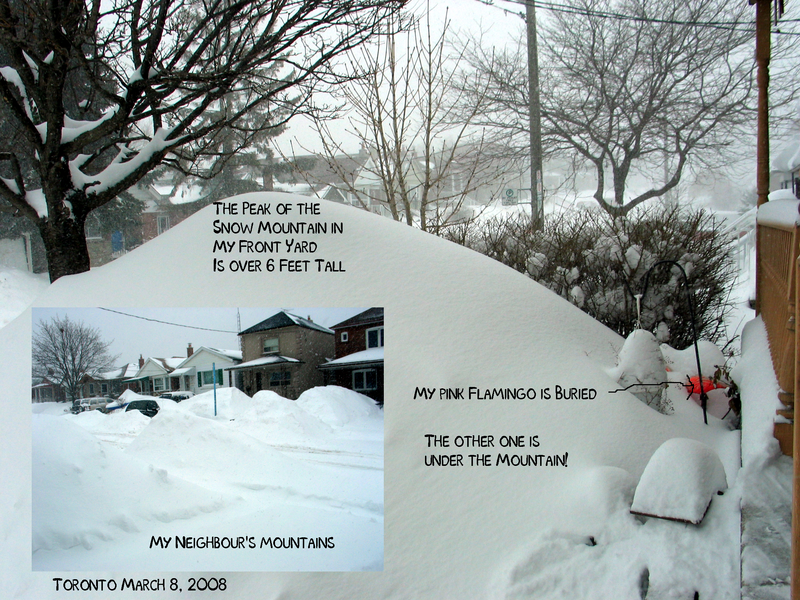
This is my front yard today. Toronto has been the recipient of about 15 cm of snow in the last 24 hours and it is still coming down (but is expected to end tonight).
So most of us in the city are nesting. I chose to nest by creating waffles for brunch. They took the edge off the cold by warming up our insides!

Gluten Free Dairy Free Sugar Free Buckwheat Waffles
Wet Ingredients
1 organic free range egg $5.53/dozen ON Karma
4 pitted dates $3.99/kg IRAN Local grocery
1/2 - 3/4 cup organic rice milk $2.09/L QC Karma
1 tbsp organic sunflower oil $2.09/L ON Karma
additional oil is required to oil the griddle
Dry Ingredients
1 cup buckwheat flour $2.46/kg MB Karma
1/4 cup tapioca flour $1.25/kg THAILAND Chinatown, Toronto
1/4 cup sweet rice flour $1.67/kg THAILAND Chinatown, Toronto
2.5 tsp aluminum/gluten free baking powder $2.99/kg ON Karma
1 tsp sea salt $1.06/kg ? Karma
Use a blender to mix the wet ingredients thoroughly (mincing the dates). Use less milk for drier waffles (and a more solid batter). Add the dry ingredients and blend well.
Pre-heat the cast iron griddle (both sides) in the oven at 450 F. Oil both sides of the griddle before adding 1/4 of the battter to one side. Cover with the other half and return griddle to the oven. Bake about 5 minutes or until steam starts escaping out of the griddle. Remove from oven and use a metal spatula to lift out of the pan. Repeat until batter is done - oiling both sides each time. Keep waffles in warming oven or freeze for future use.
Serve with warmed fruit or maple syrup (or both!).
Wet Ingredients
1 organic free range egg $5.53/dozen ON Karma
4 pitted dates $3.99/kg IRAN Local grocery
1/2 - 3/4 cup organic rice milk $2.09/L QC Karma
1 tbsp organic sunflower oil $2.09/L ON Karma
additional oil is required to oil the griddle
Dry Ingredients
1 cup buckwheat flour $2.46/kg MB Karma
1/4 cup tapioca flour $1.25/kg THAILAND Chinatown, Toronto
1/4 cup sweet rice flour $1.67/kg THAILAND Chinatown, Toronto
2.5 tsp aluminum/gluten free baking powder $2.99/kg ON Karma
1 tsp sea salt $1.06/kg ? Karma
Use a blender to mix the wet ingredients thoroughly (mincing the dates). Use less milk for drier waffles (and a more solid batter). Add the dry ingredients and blend well.
Pre-heat the cast iron griddle (both sides) in the oven at 450 F. Oil both sides of the griddle before adding 1/4 of the battter to one side. Cover with the other half and return griddle to the oven. Bake about 5 minutes or until steam starts escaping out of the griddle. Remove from oven and use a metal spatula to lift out of the pan. Repeat until batter is done - oiling both sides each time. Keep waffles in warming oven or freeze for future use.
Serve with warmed fruit or maple syrup (or both!).
Thursday, 6 March 2008
Waitress Soufflé with Dairy Free Mashed Potatoes 2.0
The movie Waitress is one of the best movies of the century so far - imho. If you have seen it then you know why it is appearing on a food blog. The main character's obsession is with creating pies as her form of therapy. If you haven't seen it and you are a foodie then you really must ;)
Last night, whilst literally whipping up the following, I pondered that movie. I had a moment of complete simpatico with the main character and I felt a relief wash through me.
My obsession is not with pies but with creating foods that I can enjoy within the parameters of my diet restrictions.
I must say that the following inspirations turned out quite divine.
Waitress Soufflé
I used my blender to beat the following ingredients:
4 organic free range eggs $5.53/dozen ON Karma
3 organic mushrooms: one crimini, one oyster and one shitake $11.74/kg ON Loblaws
1/8 cup corn meal $1.23/kg ? Karma
1/4 cup water
salt and pepper to taste
I poured this into a preheated lightly oiled 10" cast iron skillet. I added 2 cooked and chopped pieces of organic bacon ($17.24/kg ON Beretta) directly on top of the mixture. I covered the skillet on the stove top and cooked at med-low heat for about 10 minutes or until the sides started coming away. I then put this into a 275 F oven for about 15 minutes.

I served the soufflé with an organic baby spinach ($27.96/kg CA Dominion) and sliced cucumber ($1.95/each ON Karma) salad and my second effort at dairy free mashed potatoes i.e. 2.0 using internet vernacular. There were no left over mashed potatoes....they were quite good.
Dairy Free Mashed Potatoes 2.0
4 medium organic red potatoes $1.98/kg ON Karma
1/8 cup pesticide free hemp seed nut $22.00/kg MB ManitobaHarvest
1/4 lightly chopped organic white onion $3.25/kg ON Karma
1 tsp nutritional yeast $12.30/kg ? Ambrosia
1/8 cup organic sesame seed oil $16.38/L QC Karma
Peel and boil the potatoes. While the potatoes are boiling use a nut blender and grind the hemp seed nut (using a regular blender will make the 'milk' a little more textured). Using the same blender add the onion, nutritional yeast, sesame oil and about 1/4 - 1/2 cup water.
After mashing the potatoes mix in the blenderized 'milk'. I then placed this in the oven with the soufflé at 275 F for 15 minutes. The low heat softened the onions and reheated the mashed potatoes.
4 medium organic red potatoes $1.98/kg ON Karma
1/8 cup pesticide free hemp seed nut $22.00/kg MB ManitobaHarvest
1/4 lightly chopped organic white onion $3.25/kg ON Karma
1 tsp nutritional yeast $12.30/kg ? Ambrosia
1/8 cup organic sesame seed oil $16.38/L QC Karma
Peel and boil the potatoes. While the potatoes are boiling use a nut blender and grind the hemp seed nut (using a regular blender will make the 'milk' a little more textured). Using the same blender add the onion, nutritional yeast, sesame oil and about 1/4 - 1/2 cup water.
After mashing the potatoes mix in the blenderized 'milk'. I then placed this in the oven with the soufflé at 275 F for 15 minutes. The low heat softened the onions and reheated the mashed potatoes.
Saturday, 1 March 2008
Nervonic Acid...where did it go?
I love a mystery.
Don't you?
It brings out my inner Nancy Drew. I feel way more skilled than her though with my statistical knowledge (I teach statistics). So I'm more like a well designed character in a classic Agatha Christie novel....a curious statistician if you like ;)
Cooking brings out my inner Laura Ingalls Wilder (or perhaps Rose Wilder if you've read their history). Sometimes I wonder if part of each of them reincarnated with me. That is the power of books (and especially autobiographical books like the Little House in the Prairie series). Of course Nancy Drew is a purely fictional character but what young girl didn't envision herself as a detective after reading her books!
So, the mystery that unfolded to me in the last year was one that erupted when I discovered the possible death of nervonic acid from a) our food chain and b) our food information chain.
At this point you might be wondering what the heck I'm talking about...I'm keeping my cards pretty close to my chest eh?
Well, just like Agatha Christie, I'm setting it up for you. That's all this will be since any answers are not clear enough to draw firm conclusions (alas, that is the nature of the allopathic world we live in). But I will tell you where you might find some sources of nervonic acid without heading to the drugstore or compounding pharmacy.
So who is our suspected cadaver then? Not much is known about our victim. For starters, nervonic acid is also known by the two other names I've attached as labels to this post - selacholeic acid and tetracosenoic acid. But a search on those terms leads to even less information.
So nervonic acid isn't quite a "Jon Doe" but there is not exactly a lot of background information on the topic. The information on wiki's stub for Nervonic Acid indicates clearly that there is interest emerging in this monounsaturated long chain (Omega 9) fatty acid - i.e. food. Note the reference list is only 3 items long and all of them are patents.
Patents on food? Easy to do if the item has almost disappeared from our food chain and consumers look to pills and supplements for answers to health issues - and vaccines, but that's a tree I won't bark up in this mystery.
MS consumers are mentioned in one patent specifically.
In fact, MS and nervonic acid research is also currently underway by the Canadian government - research into seed breeding to create higher nervonic acid concentrations for 'treatment' purposes for MS and other diseases (scroll about 1/2 way down the page for the research headed by David Taylor). The research summary is partly as follows (bold emphasis is mine):
So we've got 3 patents and one government so far directly linked with our suspected cadaver, nervonic acid. And one source for nervonic acid - brassicaceae seeds which include many well known and not so well known items including mustard and cabbage. According to wiki (bold emphasis is mine):
Could nervonic acid consumption (or lack thereof) be a cornerstone in the mystery known as multiple sclerosis?
And why is the Canadian government supporting research into pharmaceutical applications to produce nervonic acid while not reporting it in any of our food (the Canadian nutrient database does not list nervonic acid in it's output and neither does any international nutrient data base that I've explored)?
What's up with that? To be fair, the entire class known as monounsaturated fats have been discovered to provide health benefits only very recently (the link is to an example 2007 publication on the health of children and consumption of monounsaturated fats).
But to be blunt....why fund commercial applications while not providing consumers with raw data on a nutrient that is AVAILABLE IN OUR FOOD CHAIN? (yes, this makes me a tad angry). It is like barking up a tree that nobody else sees in the forest - or only corporations are seeing.
So we now know that most governments have avoided connecting themselves with our suspected victim. ...so we have 'evidence' linking nervonic acid with 3 patents, many governments worldwide (linked by omission or commission) and one food source.
But onto another tree that I will bark up - an actual tree - for trees hold a special spotlight in my nervonic acid mystery story. A spotlight that perhaps should be floodlit but without a chemical lab at my disposal then the only actual tree I can connect with nervonic acid is the one a curious publication in Forest Products Journal identified in November 2006. The following is from that page - bold emphasis is mine:
And China? Well, now there's a country that's been just a hopping with nervonic acid production (stimulated/funded by the above publication?......the dots connect for me.....). China taking over our food chain...what a novel concept eh?
Evidence update: 3 patents, many governments including a large Chinese supplier and 2 food sources.
One more key piece of evidence in our nervonic acid story is in this pdf publication from the journal Pure and Applied Chemistry in 2001. This is an article entitled "Lexicon of lipid nutrition". Basically it reports the lipid content of many oils and foods (download this if you wish a very detailed resource on all fat contents in many foods...you will have to know the chemical composition to identify the fat that you are interested in but wiki contains that information).
Lipids are basically any fat soluble naturally occurring molecule and nervonic acid is one of the identified fatty acids in this study. The only food items that contain ANY nervonic acid in this published study are: Rapeseed (canola) oil (<3%) and Rapeseed oil (low erucic acid - this is probably what is on the market if you know that canola is heavily gmo'd) < 0.4%. Soybean and peanut oil also contain small amounts but they are not part of my diet.
Hemp oil was not reported in the previous study but a number of sites suggest that it has a nervonic acid composition of < 0.2% as does borage oil.
So as evidence in our nervonic acid mystery we have: 3 patents (at least); many countries; and a few food sources.
There are other sources of nervonic acid that have been identified in published research but all of them seem to be published by pharmaceutical interests and contain food from far away continents such as China. I included the Chinese purplebrow maple tree because just maybe the maples littering my own province contain this same molecule. And the fact that China seems to have cornered the nutraceutical market on this so far. And oh yeah...nervonic acid is present in breastmilk. Surprise surprise. I'm so glad I breastfed my daughter for 14 months.
So do we have a cadaver?
Perhaps, but, like my tag line reads, "Each morsel is an opportunity for change".
So I've grabbed some organic mustard seed powder and use it liberally in my cooking and salad dressings. I'm eating mustard greens, cabbage, turnips and hemp products like I've never before.
Nervonic acid is not dead to me. Not anymore. And that's the crux of the matter isn't it?
Don't you?
It brings out my inner Nancy Drew. I feel way more skilled than her though with my statistical knowledge (I teach statistics). So I'm more like a well designed character in a classic Agatha Christie novel....a curious statistician if you like ;)
Cooking brings out my inner Laura Ingalls Wilder (or perhaps Rose Wilder if you've read their history). Sometimes I wonder if part of each of them reincarnated with me. That is the power of books (and especially autobiographical books like the Little House in the Prairie series). Of course Nancy Drew is a purely fictional character but what young girl didn't envision herself as a detective after reading her books!
So, the mystery that unfolded to me in the last year was one that erupted when I discovered the possible death of nervonic acid from a) our food chain and b) our food information chain.
At this point you might be wondering what the heck I'm talking about...I'm keeping my cards pretty close to my chest eh?
Well, just like Agatha Christie, I'm setting it up for you. That's all this will be since any answers are not clear enough to draw firm conclusions (alas, that is the nature of the allopathic world we live in). But I will tell you where you might find some sources of nervonic acid without heading to the drugstore or compounding pharmacy.
So who is our suspected cadaver then? Not much is known about our victim. For starters, nervonic acid is also known by the two other names I've attached as labels to this post - selacholeic acid and tetracosenoic acid. But a search on those terms leads to even less information.
So nervonic acid isn't quite a "Jon Doe" but there is not exactly a lot of background information on the topic. The information on wiki's stub for Nervonic Acid indicates clearly that there is interest emerging in this monounsaturated long chain (Omega 9) fatty acid - i.e. food. Note the reference list is only 3 items long and all of them are patents.
Patents on food? Easy to do if the item has almost disappeared from our food chain and consumers look to pills and supplements for answers to health issues - and vaccines, but that's a tree I won't bark up in this mystery.
MS consumers are mentioned in one patent specifically.
In fact, MS and nervonic acid research is also currently underway by the Canadian government - research into seed breeding to create higher nervonic acid concentrations for 'treatment' purposes for MS and other diseases (scroll about 1/2 way down the page for the research headed by David Taylor). The research summary is partly as follows (bold emphasis is mine):
Nervonic acid has also been investigated as a raw material in the pharmaceutical industry for production of medication used for symptomatic treatment of MS. Therefore, the focus of this project is to produce new elite prototypes of Brassicaceae producing seed oils highly enriched in nervonic acid for human and animal health-related targets.Interesting plot twist eh? Especially coupled with this professor's research - another Canadian - he is conducting more nutraceutical research on nervonic acid. There must be a bit of money in this I'd say.
So we've got 3 patents and one government so far directly linked with our suspected cadaver, nervonic acid. And one source for nervonic acid - brassicaceae seeds which include many well known and not so well known items including mustard and cabbage. According to wiki (bold emphasis is mine):
The (brassicacaeae) family is cosmopolitan, but is concentrated in the northern temperate regions and reaches maximal diversity around the Mediterranean area.Do we now have yet another hypothesis for why MS rates are exceedingly higher the further you go from the equator? Hmmm...too simple? Sometimes the simplest explanation is the right one. Actually I would say most times.
Could nervonic acid consumption (or lack thereof) be a cornerstone in the mystery known as multiple sclerosis?
And why is the Canadian government supporting research into pharmaceutical applications to produce nervonic acid while not reporting it in any of our food (the Canadian nutrient database does not list nervonic acid in it's output and neither does any international nutrient data base that I've explored)?
What's up with that? To be fair, the entire class known as monounsaturated fats have been discovered to provide health benefits only very recently (the link is to an example 2007 publication on the health of children and consumption of monounsaturated fats).
But to be blunt....why fund commercial applications while not providing consumers with raw data on a nutrient that is AVAILABLE IN OUR FOOD CHAIN? (yes, this makes me a tad angry). It is like barking up a tree that nobody else sees in the forest - or only corporations are seeing.
So we now know that most governments have avoided connecting themselves with our suspected victim. ...so we have 'evidence' linking nervonic acid with 3 patents, many governments worldwide (linked by omission or commission) and one food source.
But onto another tree that I will bark up - an actual tree - for trees hold a special spotlight in my nervonic acid mystery story. A spotlight that perhaps should be floodlit but without a chemical lab at my disposal then the only actual tree I can connect with nervonic acid is the one a curious publication in Forest Products Journal identified in November 2006. The following is from that page - bold emphasis is mine:
Purpleblow maple (Acer truncatum) is a plant belonging to the genus Acer. In ancient China, its Chinese name was Yuanbao. The tree is widely distributed in China from north of the Jilin Province to south of the Gansu Province and from south of the Anhui Province to the Kerchin Desert of Inner Mongolia. It is one of the main species of the red-leaf trees on Mount Xiangshan and in big cities such as Beijing. In the early 1970s, seeds of purpleblow maple were exploited for their edible oil; the oil content is high reaching 45 to 48 percent (Wang 2003). The cultivation technology, constituents, and medical value of purpleblow maple have been systematically studied through intensive research projects, The results showed that purpleblow maple has been developed and exploited as food and for use in medicine and chemistry. The fatty acids of purpleblow maple seed oil contain 5 to 6 percent nervonic acid (NA).Updated evidence list: 3 patents, many governments and 2 food sources.
And China? Well, now there's a country that's been just a hopping with nervonic acid production (stimulated/funded by the above publication?......the dots connect for me.....). China taking over our food chain...what a novel concept eh?
Evidence update: 3 patents, many governments including a large Chinese supplier and 2 food sources.
One more key piece of evidence in our nervonic acid story is in this pdf publication from the journal Pure and Applied Chemistry in 2001. This is an article entitled "Lexicon of lipid nutrition". Basically it reports the lipid content of many oils and foods (download this if you wish a very detailed resource on all fat contents in many foods...you will have to know the chemical composition to identify the fat that you are interested in but wiki contains that information).
Lipids are basically any fat soluble naturally occurring molecule and nervonic acid is one of the identified fatty acids in this study. The only food items that contain ANY nervonic acid in this published study are: Rapeseed (canola) oil (<3%) and Rapeseed oil (low erucic acid - this is probably what is on the market if you know that canola is heavily gmo'd) < 0.4%. Soybean and peanut oil also contain small amounts but they are not part of my diet.
Hemp oil was not reported in the previous study but a number of sites suggest that it has a nervonic acid composition of < 0.2% as does borage oil.
So as evidence in our nervonic acid mystery we have: 3 patents (at least); many countries; and a few food sources.
There are other sources of nervonic acid that have been identified in published research but all of them seem to be published by pharmaceutical interests and contain food from far away continents such as China. I included the Chinese purplebrow maple tree because just maybe the maples littering my own province contain this same molecule. And the fact that China seems to have cornered the nutraceutical market on this so far. And oh yeah...nervonic acid is present in breastmilk. Surprise surprise. I'm so glad I breastfed my daughter for 14 months.
So do we have a cadaver?
Perhaps, but, like my tag line reads, "Each morsel is an opportunity for change".
So I've grabbed some organic mustard seed powder and use it liberally in my cooking and salad dressings. I'm eating mustard greens, cabbage, turnips and hemp products like I've never before.
Nervonic acid is not dead to me. Not anymore. And that's the crux of the matter isn't it?
If you read this entire (record long) post then you, like myself, are very interested in nervonic acid. That is why I wrote it because an amalgamation of information on nervonic acid did not exist when I discovered this nutrient and it's link to multiple sclerosis. Please leave a comment if you found my information helpful. Please also pass this information along to anyone who is pregnant and considering breastfeeding or anyone you may know that has multiple sclerosis.
Thanks to Shauna at Crazy Orange Turtle and Melissa at Gluten Free for Good for inspiring this post. Namaste to you and yours.
Subscribe to:
Posts (Atom)